 HKG
Ernest Wong
5 HYROX races over 2 seasons: 2 solo, 3 in a team with 7 partners.
One best per race type
Finish time, race by race: one race type at a time
Oldest to newest; a line going down means getting fasterThis line shows the finish time of Ernest Wong at each race, oldest on the left; lower is faster.The best was 1:47:21 at Osaka (Jan 2026); Ernest Wong was 4:54 slower at the latest race than at the first.
See the numbers
| Race | Date | Division | Finish |
|---|---|---|---|
| Osaka | Jan 2026 | Open Men | 1:47:21 |
| Chiba | Aug 2026 | Open Men | 1:52:15 |
Each dot is one Open Men race; click one for that race's report. Not enough complete, clean Open Men races yet to measure the change.
This line shows the finish time of Ernest Wong at each race, oldest on the left; lower is faster.The best was 1:20:18 at Shenzhen (Dec 2025); Ernest Wong was 15:37 faster at the latest race than at the first.
See the numbers
| Race | Date | Division | Finish |
|---|---|---|---|
| Hong Kong | Jul 2025 | Relay Mixed | 1:35:55 |
| Shenzhen | Dec 2025 | Relay Mixed | 1:20:18 |
Each dot is one Relay Mixed race; click one for that race's report. Not enough complete, clean Relay Mixed races yet to measure the change. Team times are shared with a partner, so they move with who you race with.
5 results at 5 races
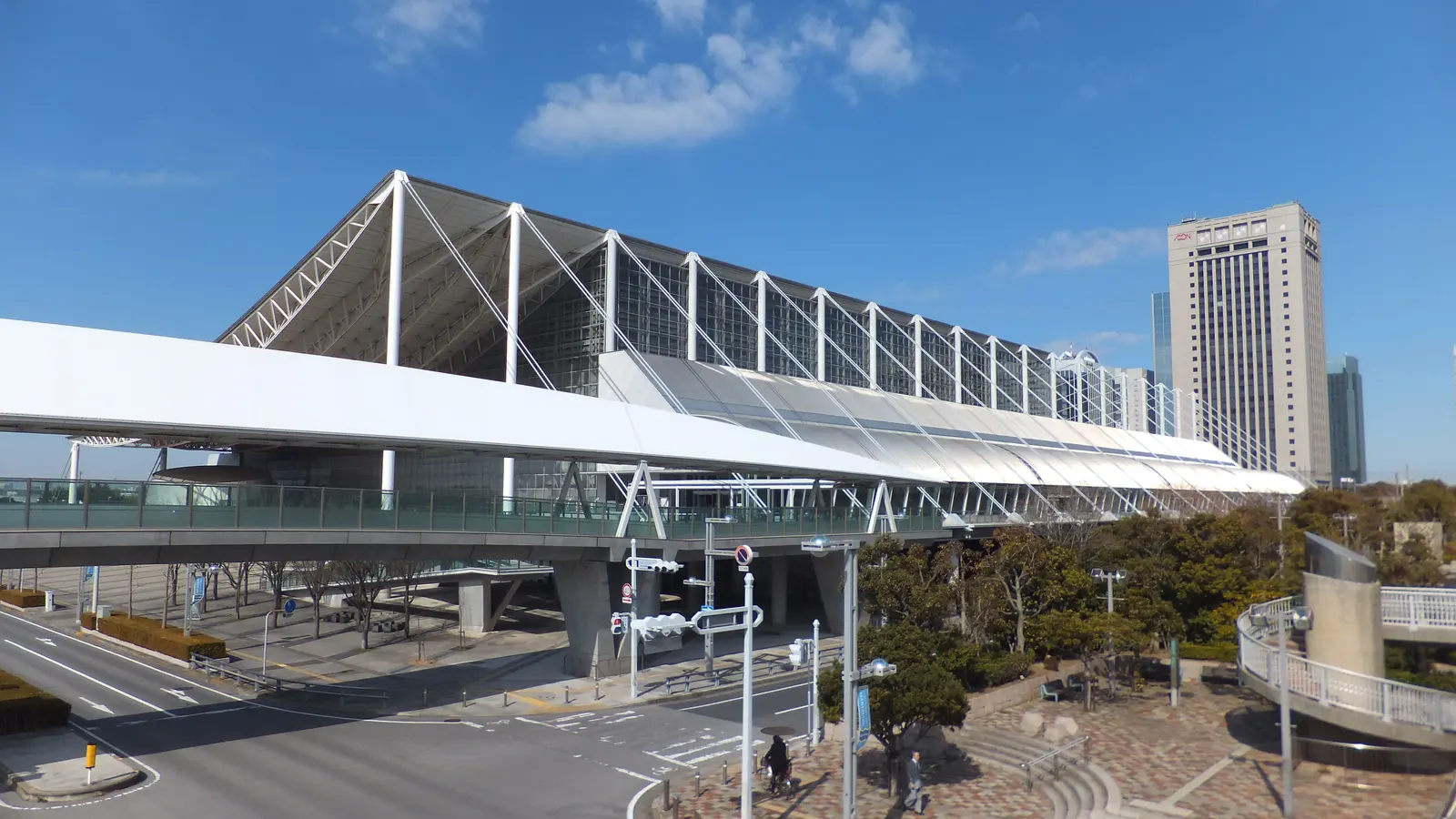
1,063rd of 1,846 Doubles Men (faster than 42%). Against the 56 who finished around 1:28:15: most time gained on the eight runs (1:14), most lost on wall balls (0:32). Runs 5 to 8 took 3:30 more than runs 1 to 4 (them: 3:39 more).
| Part | Time | Typical here | vs 1,846 Doubles Men here |
|---|---|---|---|
| Run 1: | 4:25 | 4:06 | faster than 33% |
| SkiErg: | 4:42 | 4:18 | faster than 14% |
| Run 2: | 4:54 | 4:48 | faster than 44% |
| Sled push: | 2:02 | 1:58 | faster than 43% |
| Run 3: | 4:53 | 5:03 | faster than 58% |
| Sled pull: | 4:27 | 3:51 | faster than 24% |
| Run 4: | 5:01 | 5:06 | faster than 53% |
| Burpee broad jump: | 4:17 | 3:33 | faster than 21% |
| Run 5: | 5:13 | 5:12 | faster than 49% |
| Row: | 4:58 | 4:47 | faster than 34% |
| Run 6: | 5:07 | 5:09 | faster than 51% |
| Farmers carry: | 1:55 | 1:48 | faster than 36% |
| Run 7: | 5:13 | 5:11 | faster than 48% |
| Sandbag lunges: | 4:39 | 4:13 | faster than 34% |
| Run 8: | 7:09 | 7:07 | faster than 49% |
| Wall balls: | 5:53 | 5:00 | faster than 30% |
| Roxzone: | 12:54 | 12:16 | faster than 40% |
| Runs (8 km) | 41:51 | 41:57 | faster than 50% |
| Stations (8) | 32:53 | ||
| Finish | 1:27:35 | 1:24:42 | 1063rd of 1,846 · faster than 42% |

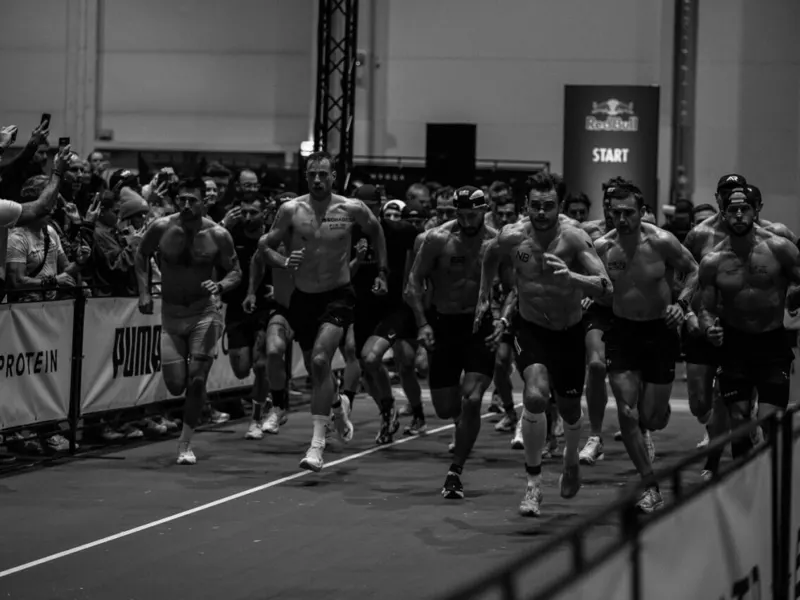
1,245th of 1,631 Open Men (faster than 23%). Against the 50 who finished around 1:46:17: most time gained on the eight runs (1:30), most lost on burpee broad jump (2:18). Runs 5 to 8 took 2:43 more than runs 1 to 4 (them: 4:09 more).
| Part | Time | Typical here | vs 1,631 Open Men here |
|---|---|---|---|
| Run 1: | 3:11 | 2:56 | faster than 31% |
| SkiErg: | 4:50 | 4:55 | faster than 58% |
| Run 2: | 6:09 | 5:18 | faster than 20% |
| Sled push: | 3:49 | 3:26 | faster than 34% |
| Run 3: | 6:19 | 5:46 | faster than 31% |
| Sled pull: | 7:38 | 5:24 | faster than 10% |
| Run 4: | 6:28 | 5:43 | faster than 25% |
| Burpee broad jump: | 8:54 | 5:23 | faster than 7% |
| Run 5: | 6:31 | 6:02 | faster than 34% |
| Row: | 5:05 | 5:00 | faster than 45% |
| Run 6: | 6:27 | 5:48 | faster than 30% |
| Farmers carry: | 2:09 | 2:26 | faster than 68% |
| Run 7: | 6:49 | 5:48 | faster than 22% |
| Sandbag lunges: | 7:07 | 5:22 | faster than 17% |
| Run 8: | 5:03 | 4:55 | faster than 46% |
| Wall balls: | 9:42 | 7:28 | faster than 25% |
| Roxzone: | 11:18 | 9:37 | faster than 29% |
| Runs (8 km) | 46:54 | 42:55 | faster than 31% |
| Stations (8) | 49:14 | ||
| Finish | 1:47:21 | 1:33:32 | 1245th of 1,631 · faster than 23% |

How to read
Place is the position among timed finishers in the same race, division and gender; a doubles place is the team's, and a relay place is among all relay teams at that race (relay teams are ranked together). Runs is the organiser's official run total (it can differ from the eight laps added up by a few seconds), stations the eight stations added up, and roxzone the time moving between them. A dash in runs, stations and roxzone on a result from the live results service means the splits are not in yet (finish time only). The age group is the one entered for that race; for a team it is the team’s age group. A dash means the organiser did not publish that number for the result. * At that edition running was under 44% of the typical finish (48% is normal): the timing mats counted some running as station time, so its runs look faster and its stations slower than they were.
7 team partners
- Grace Ho1 race
- Ivan Wong1 race
- Karen Chan1 race
- Katarina Lau1 race
- Rick Tang1 race
- Venus Cheung1 race
- Yin Ting Tom HO1 race
From the team results above. A name opens the search: a partner can have more than one page.
Osaka 2026, against 1,631 Open Men
Shape of the race
This chart shows where Ernest sat in the field on each part of the race: the edge is faster than everyone, the centre is the slowest.Strongest on Carry (faster than 69% of the field), weakest on BBJ (faster than 7%).
See the numbers
| Part | Ernest: faster than |
|---|---|
| Ski | 58% |
| Push | 34% |
| Pull | 10% |
| BBJ | 7% |
| Row | 45% |
| Carry | 69% |
| Lunges | 17% |
| Wall balls | 25% |
| Roxzone | 29% |
| Runs | 32% |
Further out means you beat more of the field on that part. A dent is a weak spot.
How you ranked on each station
How much of the field Ernest beat on each part of the race, at this race.Best: Farmers carry (faster than 69%); weakest: Burpee broad jump (faster than 7%).
Longer is better: the share of the field you beat.
Minutes against the typical finisher
Ernest's time on each part against the typical Open Men finisher at this race.Best: Farmers carry (0:17 faster); weakest: Runs (8 km) (3:59 slower).
Green, left of centre: faster than the typical Open Men finisher at this race. Orange, right: slower, and by how much.
The race as one bar: Ernest against the typical Open Men finisher
This chart draws the race in order, left to right: each 1 km run (blue), each station (yellow) and the roxzone (grey), sized by its time.Ernest: 46:58 running, 49:14 at the stations and 11:18 in the roxzone; the longest station was the wall balls (9:42).Below, Typical Open Men: 42:16 running, 39:24 at the stations and 9:37 in the roxzone; the longest station was the wall balls (7:28).
See the numbers
| Part | Ernest | Typical Open Men |
|---|---|---|
| Run 1 | 3:11 | 2:56 |
| SkiErg | 4:50 | 4:55 |
| Run 2 | 6:09 | 5:18 |
| Sled push | 3:49 | 3:26 |
| Run 3 | 6:19 | 5:46 |
| Sled pull | 7:38 | 5:24 |
| Run 4 | 6:28 | 5:43 |
| Burpee broad jump | 8:54 | 5:23 |
| Run 5 | 6:31 | 6:02 |
| Row | 5:05 | 5:00 |
| Run 6 | 6:27 | 5:48 |
| Farmers carry | 2:09 | 2:26 |
| Run 7 | 6:49 | 5:48 |
| Sandbag lunges | 7:07 | 5:22 |
| Run 8 | 5:03 | 4:55 |
| Wall balls | 9:42 | 7:28 |
| Roxzone | 11:18 | 9:37 |
| Finish | 1:47:21 | 1:33:32 |
The race in order, left to right. A wider block than the one below is slower than typical.
Burpee broad jump cost 3:31 against the typical Open Men finisher at Osaka 2026. The burpee broad jump guide shows whether that is strength or pacing, and the workouts that fix it.
Fix burpee broad jump. Then beat 1:47:21.
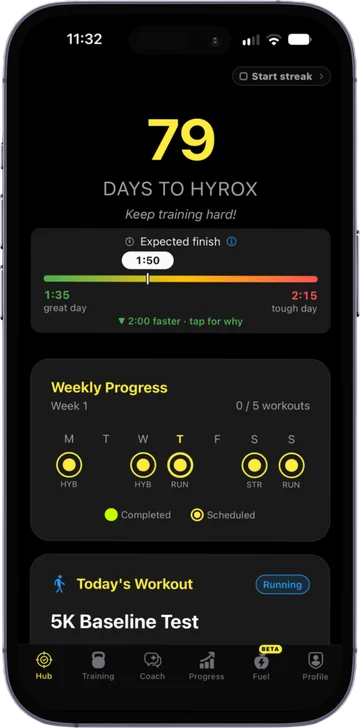
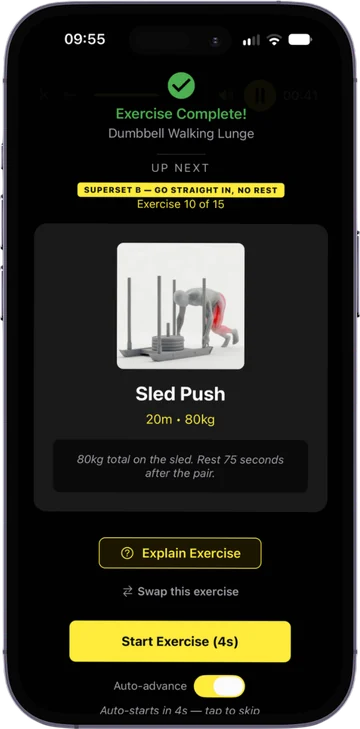
The RoxHype app is your training plan to race day: built from your splits, your kit and your race date, and adjusted every week.
- A week-by-week plan that counts down to your race
- Extra work on your slowest stations
- Adjusts every week to what you actually did
Free to download. Used by more than 40,000 HYROX athletes.