
 GER
GER Martina Schlager
3 HYROX results (1 solo, 2 in a team) over 1 season. Personal bests: Open Women 1:39:56 (Berlin 2026) · Doubles Women 1:23:46 (Vienna 2026).
One best per race type
Doubles Women: finish time, race by race
oldest to newest · a line going down means getting fasterEach dot is one Doubles Women race. Not enough complete, clean Doubles Women races yet to measure the change. Team times are shared with a partner, so they move with who you race with.
3 results
| Race | Division | Time | Place | Runs | Stations | Roxzone | |
|---|---|---|---|---|---|---|---|
| Berlin 2026 22 May 2026team: Melanie Thöne, Martina Schlagerwhat the whole field did → | Doubles Women · team 50-54 | 1:30:18 | 1705th of 2,805 | 39:36* | 34:01* | — | splitsSkiErg4:50Sled push2:00Sled pull4:34Burpee broad jump4:39Row5:37Farmers carry1:59Sandbag lunges4:42Wall balls5:40Run 14:11Run 24:27Run 34:36Run 44:39Run 54:49Run 64:50Run 74:55Run 87:14Full report for this race → |
| Berlin 2026 22 May 2026what the whole field did → | Open Women · 50-54 | 1:39:56 | 1561st of 2,407 | 37:32* | 46:06* | 16:23 | splitsSkiErg5:22Sled push3:09Sled pull7:20Burpee broad jump7:18Row5:23Farmers carry2:49Sandbag lunges6:21Wall balls8:24Run 14:06Run 24:18Run 34:24Run 44:31Run 54:43Run 64:33Run 74:36Run 86:24Full report for this race → |
| Vienna 2026 6 Feb 2026team: Martina Schlager, Melanie Thönewhat the whole field did → | Doubles Women · team 45-49 | 1:23:46 | top 38% 432/1,157 | 47:54 | 29:49 | 6:07 | splitsSkiErg4:47Sled push1:34Sled pull4:35Burpee broad jump4:01Row5:16Farmers carry1:35Sandbag lunges3:36Wall balls4:25Run 16:36Run 25:43Run 35:52Run 45:53Run 55:55Run 65:55Run 75:50Run 86:14Full report for this race → |
Place is the position among timed finishers in the same race, division and gender; a doubles place is the team's. Runs is the organiser's official run total (it can differ from the eight laps added up by a few seconds), stations the eight stations added up, and roxzone the time moving between them. The age group is the one entered for that race; for a team it is the team’s age group. A dash means the organiser did not publish that number for the result. * At that edition running was under 44% of the typical finish (48% is normal): the timing mats counted some running as station time, so its runs look faster and its stations slower than they were. How the numbers are made.
Berlin 2026, against 2,407 Open Women
Shape of the race
Each spoke is one segment (roxzone is the time moving between stations). The further out, the bigger the share of the field beaten on it. A round shape is an even race; a dent is a weak station.
How you ranked on each segment
Longer is better: the share of the field this segment beat.
Minutes against the typical finisher
Green, left of centre: faster than the typical Open Women finisher at this race. Orange, right: slower, and by how much.
The race as one bar: Martina against the typical Open Women finisher
Left to right is the race in order: run 1, SkiErg, run 2, sled push, and so on. A block wider than the one below it is a slower segment than the typical finisher.
Sled pull cost 2:24 against the typical Open Women finisher at Berlin 2026. The sled pull guide shows whether that is strength or pacing, and the workouts that fix it.
Fix sled pull. Then beat 1:39:56.
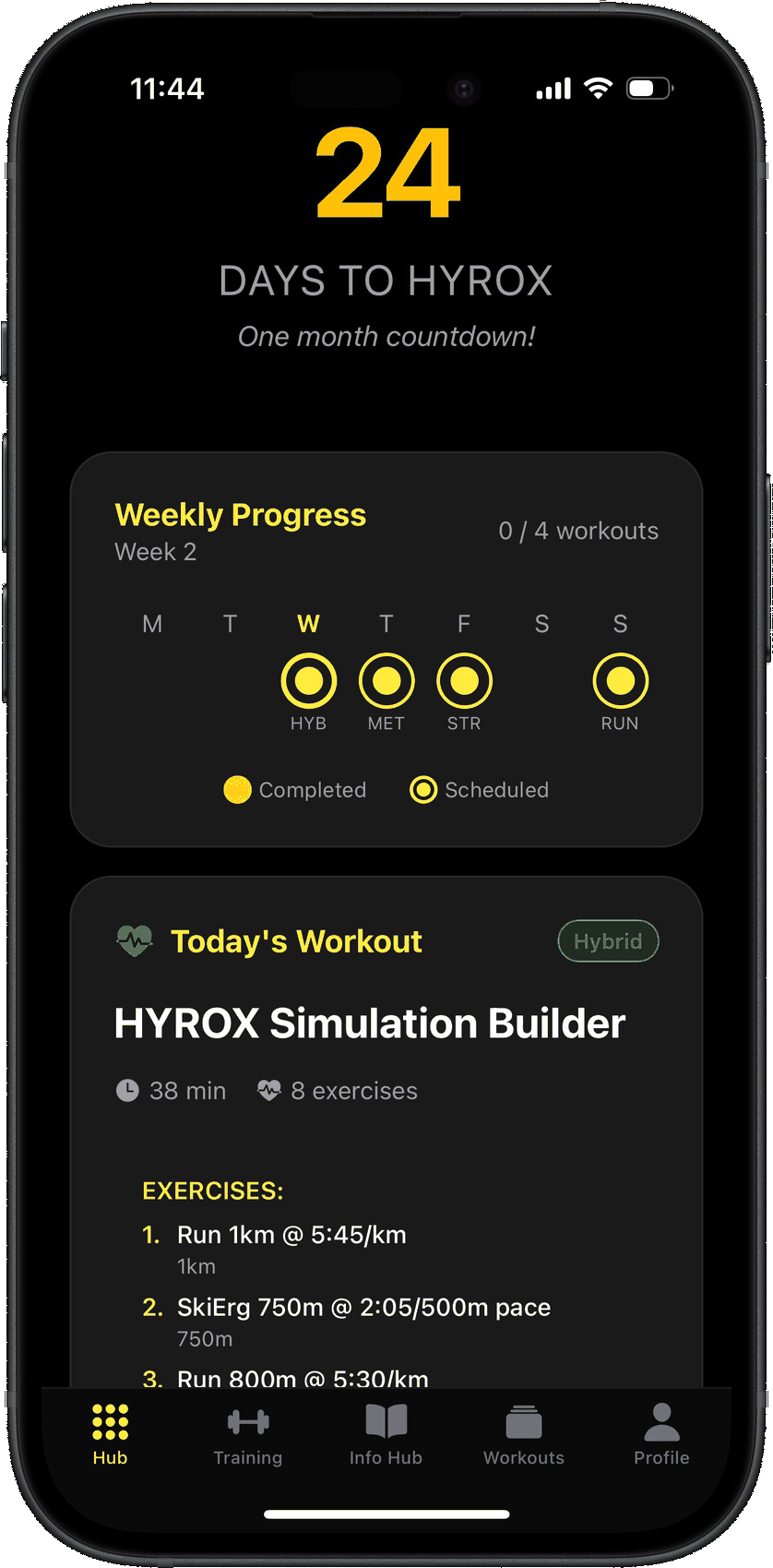
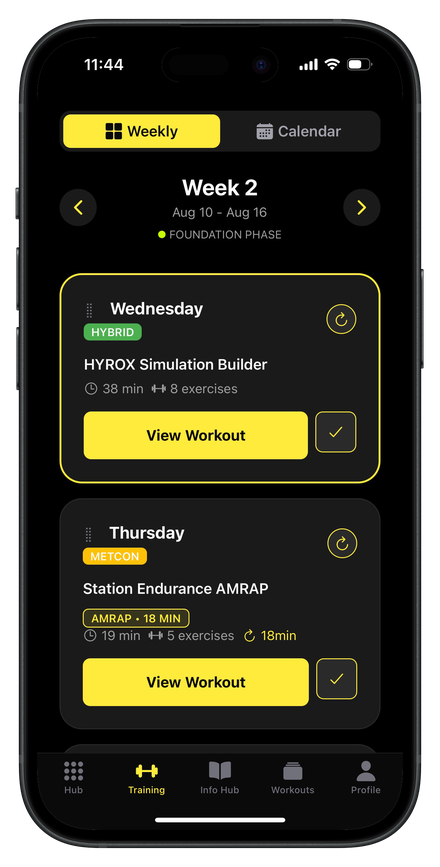
The RoxHype app takes your real splits, your kit and your next race date, and builds the weeks between.
- Every session written for your weak station, not a generic plan
- Rebuilt each week from what you actually did
- Race-day pacing from your own splits
Free to download. Used by more than 40,000 HYROX athletes.